
Beyond the Headlines: The Story of Iran We Don’t Hear Often Enough
There are moments when the headlines feel overwhelming. War. Conflict. Politics. Power. But behind every headline are people… families, culture, and history spanning thousands of years.
In a recent Herstories conversation, I sat down with Sherean Malekzadeh to talk about Iran, not just the politics but the people, the culture, and the lived experience that rarely makes it into the news. What unfolded was not simple. It was layered, emotional, and deeply human.
A Story of Identity and Belonging
Sherean’s story is one of dual identity. Her father is Iranian, and her mother is from West Virginia. She has lived in both the United States and Iran, giving her a perspective that is both deeply personal and rooted in real experience. She describes herself simply as “half Iranian,” but that identity runs deep.
She has walked Tehran’s streets, visited family, and experienced the culture firsthand. Those memories are not abstract. They are lived. Family. Language. Food. Tradition. The things that shape who we are. So much of what she remembers is not politics but people: the warmth of family, the kindness of strangers, and the everyday moments that define a culture.
A Culture Rooted in Depth and Beauty
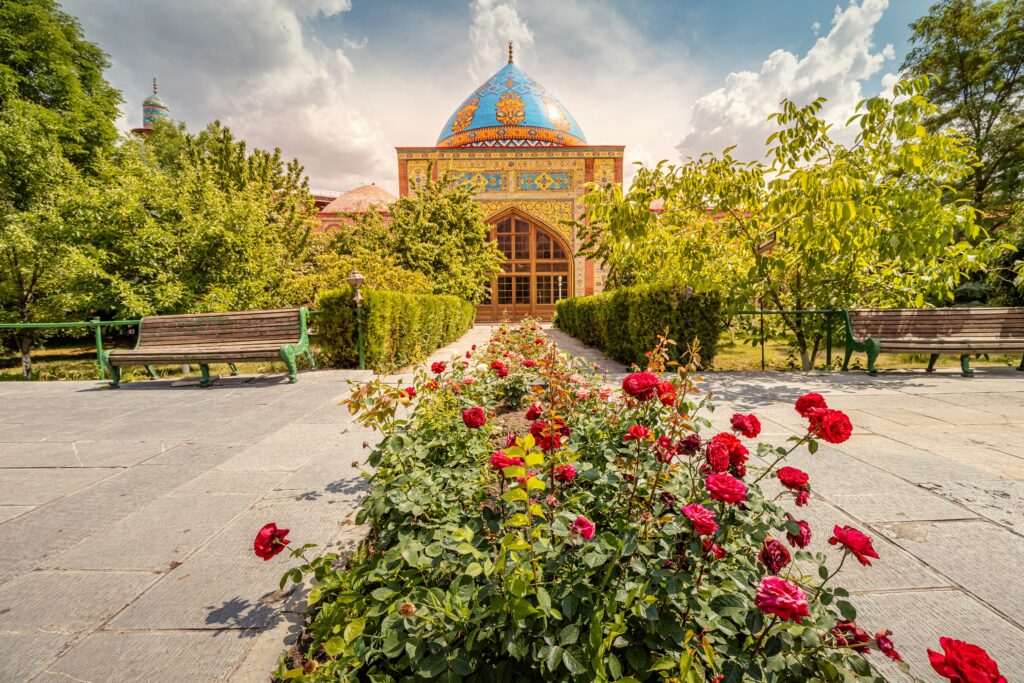
Iran is one of the world’s oldest continuous civilizations, with contributions spanning centuries, from early advances in mathematics and engineering to poetry, art, and architecture that still inspire today. But what stood out most in our conversation was not just the history. It was how that history lives on in everyday life.
Iranian culture is deeply poetic. Gratitude is expressed with intention. Hospitality is not optional. Generosity is woven into daily interactions. If you compliment something in someone’s home, there is a real chance it will be gifted to you on the spot. That generosity is not performative. It is cultural. Even the language reflects this depth, with expressions layered with beauty and respect. It is a reminder that culture is not just what you see. It is how people live, speak, and connect.
The Disconnect Between People and Politics
A government is not its people. Many of us struggle to separate the two, especially in times of conflict.
Inside Iran today, many people want change but lack the freedom to make it happen. Elections are controlled. Information is limited. Speaking out can carry real consequences. And yet there is no single perspective, even within families. Some want change at any cost. Others fear the cost. It is not black and white. It never is.
Living in Uncertainty
What makes this moment especially difficult is the uncertainty. Communication is limited, and internet access is restricted. Families outside Iran often struggle to reach loved ones. For those inside the country, daily life continues under immense pressure. There are no easy exits. Many people are simply trying to get through each day safely.
Beyond the immediate danger, there is something deeper. Trauma. The kind that lingers long after the headlines fade.
Why This Conversation Matters
It is easy to reduce a country to its politics. It is harder, but far more important, to see the people. To understand that behind every policy, every conflict, and every decision, real lives are being affected.
Iran is more than a headline. It is a culture rich in beauty, resilience, and depth. It is a people who are kind, generous, and proud of their heritage. It is a history that deserves to be understood, not simplified. Above all, it is a reminder that we can hold more than one truth at once. We can recognize conflict and still honor humanity.
A Final Thought
In Iranian culture, poetry is not reserved for special occasions. It is part of everyday life, something people carry with them. Maybe that is what we need more of right now: depth, understanding, and humanity. When we look beyond the headlines, we do not just see a country. We see people.
Please listen to this powerful Herstories episode.